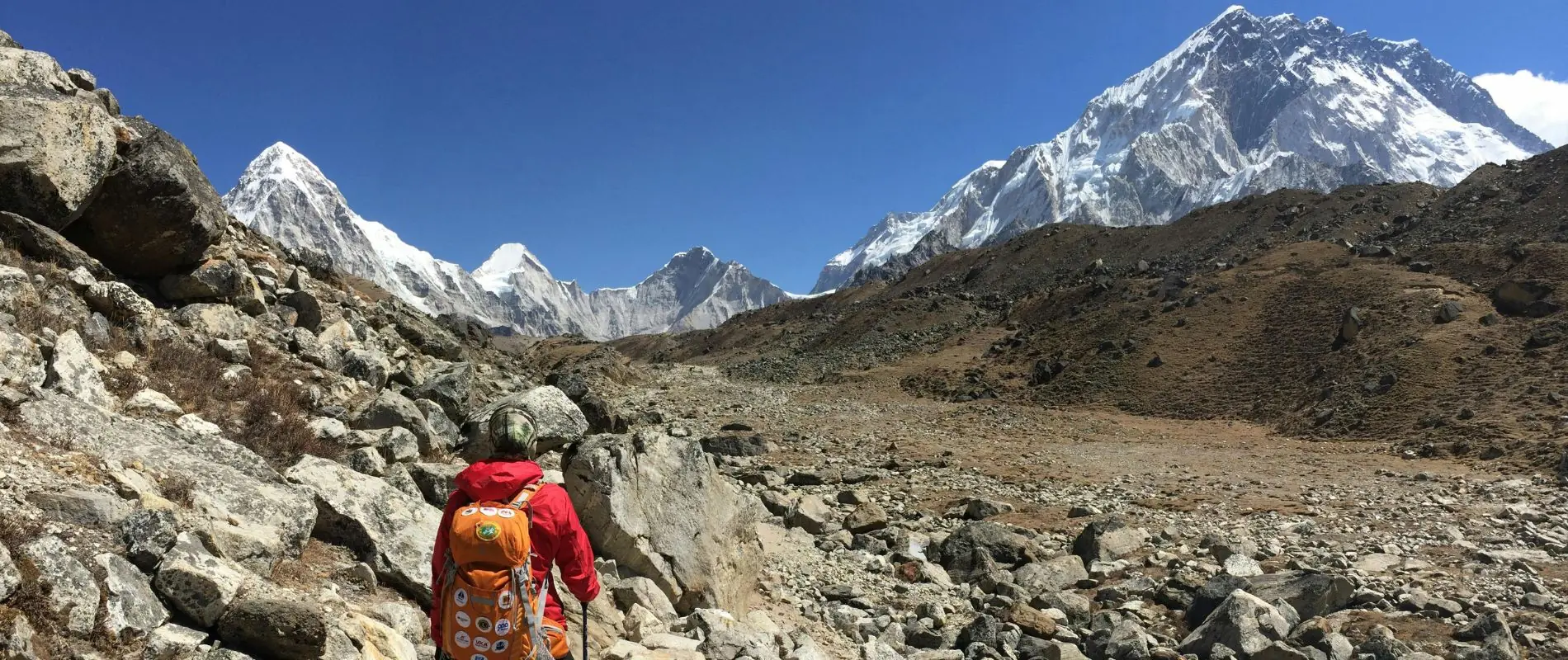
Annapurna Base Camp Trek: What to Know Before You Go
Shreeyash Thapa
SHERPA DAI SUMMARY
Intelligent Himalayan Trail Analysis
"Embarking on the 7-11 day Annapurna Base Camp trek offers breathtaking Himalayan views and rich cultural immersion, though it requires careful physical preparation, proper acclimatization, and adherence to safety and permit guidelines."
Route & Itinerary Planning
The standard ABC trek spans 7 to 11 days, taking hikers through diverse landscapes up to the 4,130-meter glacial basin while offering scenic highlights like Poon Hill and Machhapuchre Base Camp.
Health & Altitude Safety
Preventing altitude sickness requires gradual ascent, staying heavily hydrated, and monitoring for symptoms, while also avoiding meat past Chhomrong and exercising caution with local substances like mad honey.
Permits & Regulations
Foreign trekkers must secure both an Annapurna Conservation Area Permit (ACAP) and a TIMS card, and hiring a licensed trekking guide is mandatory under current Nepal Tourism Board provisions.
Table of Contents
Click any topic to jump directly to that section
Introduction: Annapurna Base Camp Trek
Annapurna Base Camp Trek (ABC Trek), also known as the Annapurna Sanctuary Trek, is one of the most popular treks, promising breathtaking views that feel like sitting on the lap of the Himalayas. The ABC trek leads you to a high-altitude glacial basin of 4,130 meters (13,550 feet) and takes 7-11 days.
Altitude sickness is a serious risk on the ABC trek; the body needs time to adjust to lower oxygen levels at higher elevations. To complete the ABC trek with fewer complications, ascend gradually while pacing yourself, hydrate with 3-4 litres of fluids daily, and allow time for acclimation by resting at stops such as Chhomrong, Dovan, and MBC. Avoid smoking, drinking alcohol, and supplements that could worsen altitude adjustment.
If you observe any HAPE/ HACE symptoms, including severe headache, persistent vomiting, confusion, or staggering, immediately consult your guide.
The trail passes several attraction points that make the long walking days worthwhile. At 3,700 meters, there is a renowned view of Machhapuchre, also known as Fishtail, from Machhapuchre Base Camp(MBC) due to its distinct double summit. At 3,210 m, A magical golden-light sunrise at Poon Hill can be observed. Jhinu Danda hot spring is a perfect place to relax after long days of walking.
This guide goes through a few things you should know before you plan for the Annapurna Base Camp Trek.
Annapurna Base Camp Trek for Indians
Annapurna Base Camp trek is one of the most popular travel destinations among Indian travellers. ABC trek is popular for its breathtaking panoramic views, warm Nepali hospitality, and affordable adventure. In the fiscal year 2025-2026, Annapurna Conservation Area recorded 508,479 foreign visitors, of whom 375,797 were Indians.
With its diverse, ever-changing landscapes and serene, spiritual atmosphere, the ABC trek offers a beautiful journey for Indian travellers. For Indian travellers, Gorakhpur is the best option for reaching the trek's starting point, Pokhara.
Gorakhpur to Pokhara Route for Indian Travelers
For Indian travellers, reaching Pokhara is a crucial step in starting their journey on the Annapurna Base Camp (ABC) trek. Gorakhpur is a suitable starting point to reach Pokhara, travelling by land via the Sunauli-Bhairahawa border.
In this section, we’ll cover the best ways to travel from Gorakhpur to Pokhara with estimated cost, mode of transportation, and time duration.
Route | Mode | Duration | Fare |
Gorakhpur-Nautanwa | Train | 2hr 15min | INR 150- INR 1,190 |
Nautanwa-Bhairahawa | Rickshaw, Ride Share | 18-20 min | INR 200- INR 300 |
Bhairahawa-Pokhara | Flight Microbus, Hiace Deluxe Bus | 20 min 7hr-13hr 7hr-13hr | INR 3000-INR 4000 INR 500- INR 750 INR 750- INR 1100 |
This is the optimal route when travelling from Gorakhpur to Pokhara by land using various available means of transportation, along with estimated price and duration as of October 2026.
Annapurna Base Camp Route Overview
Trekkers can have different experiences through alternate routes. Here, we are providing you with a basic ABC trek route that is widely used and covers multiple attractions. This route is based in Pokhara as the start and end point.
Day | Route | Distance | Walking Hours | Altitude |
1 | Pokhara-Nayapul(Drive) Nayapul-Tikhedhunga | 41-42 km 8-10 km | 1-2 hours(drive) 3 hours | 822m -1070m |
2 | Tikhedhunga-Ghorepani | 10-13 km | 4-5 hours | 1070m-2860m |
3 | Ghorepani-Poon Hill Hike Poon Hill-Tadhapani | 1.5 km 8-10 km | 45min-1hr 3 hours | 2860m-3210m 3210m-2630m |
4 | Tadhapani-Chhomrong | 8-10 km | 5-6 hours | 2630m-2170m |
5 | Chhomrong-Dovan | 8.6-10 km | 5-6 hours | 2170m-2600m |
6 | Dovan-Machhapuchre Base Camp | 7-10 km | 5-6 hours | 2600m-3700m |
7 | Machhapuchre Base Camp-Annapurna Base Camp | 3-4 km | 2-3 hours | 3700m-4130m |
8 | Annapurna Base Camp- Bamboo | 12-15 km | 6-7 hours | 4130m-2310m |
9 | Bamboo-Jhinu Danda | 9-10 km | 4-5 hours | 2310m-1780m |
10 | Jhinu Danda-Nayapul Nayapul-Pokhara(Drive) | 10-16 km | 5-6 hours | 1780m-1070m 1070m-822m |
The given itinerary is one of the many itineraries chosen by most people. The itinerary can be customised according to personal preference. For more detailed routes and the itinerary, you can visit our Annapurna Base Camp trek package.
What Teahouses Are Really Like
Most people assume a cozy teahouse with amenities such as high-quality food, heated rooms, and internet access. Although this may be true for a few teahouses, most have paper-thin walls and no heated rooms, which is why guides suggest travellers bring a sleeping bag.
The quality of food also deteriorates significantly in the Chhomrong region, and most teahouses charge extra for basic amenities such as warm showers, internet, boiling water, and charging ports.
Individual teahouses set their own rates. Travellers should be wary of these charges and choose teahouses and hotels accordingly.
Food and Meat After Chhomrong
Due to religious beliefs, locals have a strict “No-Kill” policy that forbids the slaughter of animals. Meat is often not available from Chhomrong onwards, and if it is, it is a health hazard, as it has been carried over long distances in an open basket without refrigeration, resulting in stomach bugs and other diseases. It is strongly suggested to stick to vegetarian options to prevent any minor difficulties.
Why the Descent Is Harder Than the Climb
While returning to the endless stone stairs (Chhomrong stairs), there is immense pressure on our lower body, causing severe joint pain and muscle shaking. There are also several loose and uneven steps that may cause a loss of balance, increasing the risk of an ankle twist. Due to cumulative fatigue, the muscles are less likely to absorb shock.
After reaching the base camp, the primary mental driver to reach a goal comes to an end, and adrenaline fades away. It is also psychologically harder to return from the ABC trek than to reach it.
Best Time To Trek: Season, Hazards and Views
Weather and season play a crucial role in mountain visibility and trail conditions on the Annapurna Base Camp trek. The best season is Autumn (September-November), as the weather is stable, with clear skies and cool temperatures. The visibility of the Annapurna range is at its best. There are red and pink rhododendrons blooming at lower altitudes during spring, and the weather remains clear enough to see the mountains.
Each season also presents potential hazards. During spring, there is a high chance of avalanches and snowmelt, particularly between Deurali and ABC. The monsoon can cause landslides, mudslides, slippery trails, and an increase in leeches. Winter can bring heavy snow, freezing temperatures, and an increased risk of hypothermia.
Clouds enter the amphitheatre around 10:00 AM due to thermal convection, even during dry months like October and November. The most optimal time to get the full uninterrupted view of the Annapurna range is 5:00-9:00 AM.
Is Solo Trek Possible?
Under the Nepal Tourism Board’s revised TIMS provisions, effective from March 31, 2023, the Poon Hill–ABC route is listed as a route requiring a licensed trekking guide and a TIMS card issued through a government-registered trekking agency.
Solo trekking without a licensed trekking guide may not comply with published requirements. Foreign trekkers must also obtain the required permits before setting out.
To understand the benefits of hiring a guide and porter for your trek, read our detailed guide on why you should hire a guide and porter for trekking in Nepal.
ACAP and TIMS Permit: Cost and How to Get Them
Foreign nationals require two permits to trek in the Annapurna Region: The Annapurna Conservation Area Permit (ACAP) and the Trekker’s Information Management System (TIMS) card. The ACAP permit is NPR 3000 for foreign nationals and around NPR 1000 for SAARC nationals.
As for the Trekker’s Information Management System (TIMS) card, trekkers will have to pay a fee of NPR 1,000 per person for a Blue TIMS card. Similarly, trekkers from SAARC countries have to pay NPR 300 for TIMS cards.
To apply for these permits, a person must have a valid passport, passport-size pictures, and a detailed itinerary.
The entry fee can be paid through both online and counter payment. For online payment, an additional 2.9% payment gateway charge is applied, and the permit is received through email after successful payment. If you choose counter payment, you must visit the Entry Permit(EP) counter and pay for the permit.
The permits can be collected in person through the Nepal Tourism Board office in Kathmandu, the Tourism Office in Pokhara, or through your registered trekking agency.
Note: Double fees will be charged for permits issued at Check-Posts.
Why Is a Permit Necessary
The Trekker’s Information Management System (TIMS) card records the traveller’s details, emergency contact, expected route, and itinerary. If any incident occurs, rescue teams know where to look.
The permit funds biodiversity conservation, waste management, and trail maintenance.
Permit fees also finance schools, health posts, and infrastructure at remote mountain villages.
Physical Challenges of the Annapurna Base Camp Trek
Being fit is certainly an advantage, but trekking for 8 consecutive days is very different from working out for 45 minutes. Since most people are used to training for short, intensive intervals, long, steady ascents at a set pace for several hours require patience, muscle endurance, and mental capacity.
As trekkers ascend further into the mountains, they may experience signs of altitude sickness. Some include headaches, nausea, and dizziness. Specific trekking training is recommended 3 months prior to the trek and usually focuses on cardio and muscular endurance in the glutes, calves, and quads.
Mad Honey: Safety Concerns
There are many assumptions about Mad Honey. It is often described as a psychedelic substance or traditional medicine. Mad honey is full of neurotoxins called grayanotoxins and can cause grayanotoxin poisoning, which can result in nausea, dizziness, a slow heartbeat, and low blood pressure.
Many trekkers are warned about mad honey, as it may be sold along the trails at higher altitudes. The effect of the honey depends on the dosage and toxin concentration, which vary with region, season, and batch.
It is best not to use Mad Honey, as it can cause a medical emergency in remote areas where access to medical care is limited.
Final Tips Before You Book
The Annapurna Base Camp trek is one of the most beautiful treks you can do on foot, immersing you in nature's true beauty, colored by pink and red rhododendron blooms in Spring. The Annapurna Conservation Area hosts diverse wildlife, including langurs, Himalayan tahr, and pheasants.
Before making any bookings, start preparing physically, plan your itinerary, and choose a trekking agency that suits your needs. During the trek, drink plenty of water, pace yourself, and follow your guide’s advice, even when you feel fine.
FAQs
How difficult is the Annapurna Base Camp(ABC) trek?
The ABC trek is considered moderate as it does not require any professional experience. Although it's rated moderate, it is not easy and requires physical fitness.
How long is the ABC trek?
It is usually a 7-11-day trek depending on your start and end destination and your trekking agency. The trek could take longer or shorter based on the route.
Is ABC Trek beginner-friendly?
ABC trek is beginner-friendly and a popular first-timer trek for many people. Beginners prefer the ABC trek because it offers a lifetime experience in a short time.
How much will it cost to complete the ABC trek?
Usually, it ranges from $600 to $ 1,500 depending on your preferences, trekking agency, and level of comfort. It can cost differently for each individual to rent gear and transportation to reach the start point of the trek.
What is the best time for the ABC trek?
The best time for the Annapurna Base Camp trek is Spring and autumn. There may be potential hazards such as avalanches.
How risky is ABC trek?
The Annapurna Base Camp (ABC) trek is generally considered safe and beginner-friendly. Although it is considered safe, there may be specific environmental risks, and travellers might experience some discomfort from Acute Mountain Sickness (AMS).
How to prepare yourself for the ABC trek?
You must prepare your body with specific workouts that focus on muscle endurance, gather gear, customise your itinerary, and apply for permits. You can also research and choose a trekking agency that suits you best.
Is Annapurna Base Camp(ABC) easier than Everest Base Camp(EBC)?
Yes, the Annapurna Base Camp trek is comparatively easier than the Everest Base Camp trek, as EBC is at a higher altitude(5,300m- 5,645m), increasing the risk of altitude sickness. It also typically takes an additional 4-5 days.
How do I prevent altitude sickness during my ABC trek?
Some tips that our guides use to avoid altitude sickness are:
Ascend at a steady pace with adequate rest and sufficient acclimatization.
Hydrate yourself continuously.
Listen to your body
Maintain a sleep routine
Avoid alcohol, smoking, and tobacco products.
What is the total distance of the Annapurna Base Camp trek?
The Annapurna Base Camp trek typically takes 7-11 days, with a total distance of 95-115 km for the round trip. The total distance also depends on the starting point, alternate routes, and extra sightseeing.
Shreeyash Thapa
Himalayan Trekking Specialist
Sharing reliable trekking insights, seasonal guides, and authentic cultural stories from across Nepal's majestic trails.
READ ALL ARTICLES →Featured Treks

Need Custom Trekking Advice?
Unsure which season or trail fits your fitness level? Let our Himalayan experts customize an itinerary tailored specifically for you.
